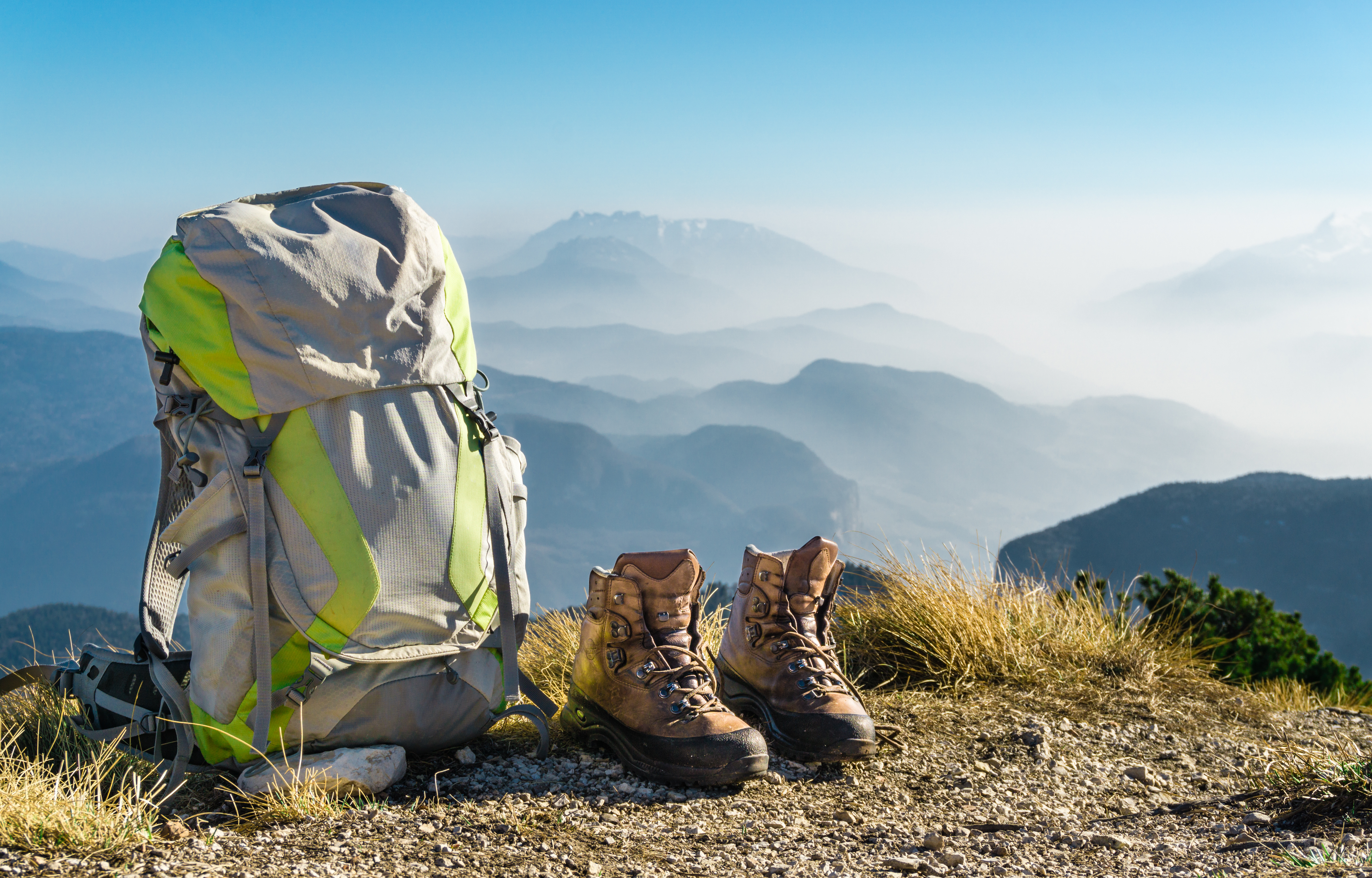
Small tips for preparing your hiking backpack
Ultimate guide on how to prepare your backpack and out tips to travel lightly
The hiking backpack is your most important adventure companion. Packing it properly is fundamental for a great experience: a well-organized backpack makes all the difference; helping prevent strain on your back and shoulders.
Trekking backpacks are designed to provide comfort, safety and stability. They feature functional and practical elements like side pockets, padding and hip belts, designed to make your hut-to-hut hiking experience more enjoyable.
Before sharing our tips on how to prepare your hiking backpack, it’s important to learn how to choose the right one. On the market, there are countless options and models, but you only need to pay attention to a few basic characteristics to make the best choice.
Obviously, the climate, type of terrain and the season affect how you pack, it is essential to choose your equipment and clothing carefully.
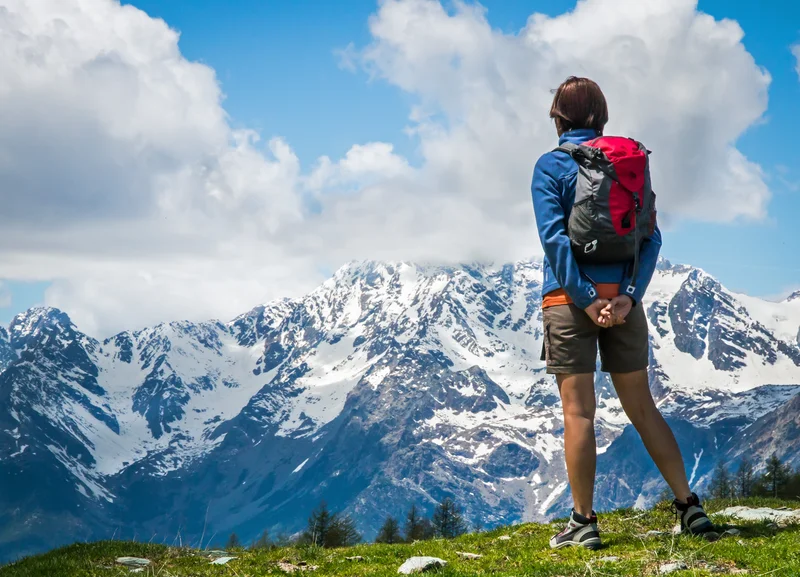
Guidelines for choosing your travel companion
Capacity
The capacity of your backpack is measured in liters. Generally, for a summer hike of 2/3 days a 30/35-liter backpack should be enough, while for longer hikes a 40/50-liter backpack would be better. For itineraries that include a via ferrata, even on longer hikes, it is better to choose a smaller backpack because larger backpacks make it harder to pass through narrow ledges, tunnels and technical sections.
For a winter hike, a backpack with a capacity of 40 or 45 liters should be the right size to contain all the necessary equipment. In general, we recommend avoiding backpacks that are too big, so you won’t end up carrying unnecessary weight by filling it with items you don’t need.
Materials
The material should be sturdy and durable, ensuring balance between lightness and durability. We suggest choosing backpacks made of materials like nylon or polyester. For more safety, we recommend waterproof backpacks or models equipped with rain covers.
Fit and comfort
Since you’ll be carrying your backpack for many hours every day, it’s important that you consider both fit and comfort. It is fundamental that your hiking backpack suits your needs and ensures safety by distributing weight evenly and giving adequate back support. The back panel is a crucial element of comfort; it helps distribute the load more effectively and ensures stability. To maximize comfort, you should also consider the length and shape of the back panel. It should match the length of your torso and the width of your shoulders. Transpiration is also an essential factor, it helps regulate body temperature by reducing sweat and the moisture build-up on your back, especially during the summer. For better ventilation and stability, you can choose a backpack with a mesh back, which also improves overall ergonomics. To ensure a proper fit and greater stability, you should also consider the shoulder straps and the presence of a hip belt and load-stabilizing straps. Shoulder straps are padded and adjustable to prevent an excessive strain on the shoulders. The hip belt ensures a better balance by distributing the weight evenly between the shoulders and the hips. And the load-stabilizing straps help stabilize the load and keep the backpack close to the body. Other straps that improve the hiking backpack stability are the sternum straps, which connect the shoulder straps and prevent them from slipping.
In general, these components ensure stability and an even distribution of the weight to improve your balance.
When purchasing a trekking backpack, it is also important to check whether it is unisex. Some brands also produce backpacks designed to fit the female body shape. For this reason, we suggest women to look for backpacks labeled with “women”, as its shoulder straps, hip belts and back panels are designed to adapt to the female body.
Practicality
Practicality is essential, this characteristic depends on structural features like compartments and pockets. The hiking backpack has a main compartment which holds most of your clothes and gear, a lower compartment that is used to store the sleeping bag liner. Additional internal compartments help organize the content of the backpack more efficiently. Other pockets are usually on the outside of the backpack. These are mesh or elastic pockets generally used for water bottles or other accessories that you prefer to keep within easy reach. Many backpacks also have pockets on the hip belt for small items that you may need to access quickly, such as your phone. We suggest hiking backpacks that include all these features so you can organize your gear and clothes efficiently. This makes everything more accessible and tidier. Some backpacks also have a back-panel opening, which allows you to reach easily items stored at the bottom of the backpack, without having to empty the entire backpack.
Now let’s move on to the important part: what should you put in your backpack for a multi-day hike? And how do you pack the hiking backpack?
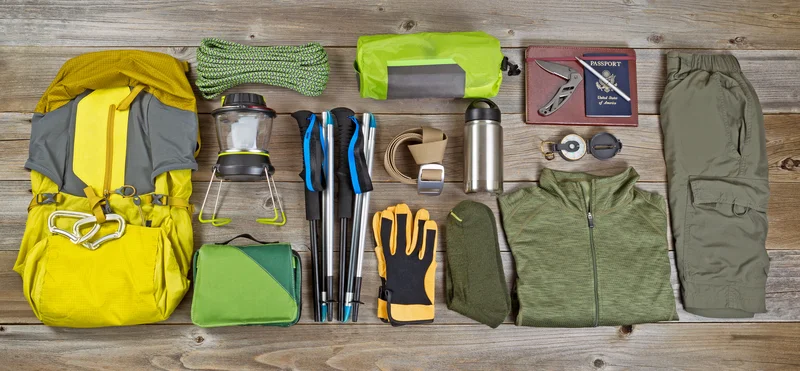
One thing you should pay attention to is the weight of your backpack. Several factors come into play, such as your weight, height, habits and experience in carrying loads. Our advice to ensure comfort and safety on your hike is not to exceed 7 kilograms, not including water. It is important to bear in mind that the bigger the backpack, the heavier it will be when empty, and this will affect how much gear and clothing you can carry.
Depending on the trek you are planning it is crucial to choose the right size for you, avoiding unnecessary extra weight.
The secret is not to bring too much! For this reason, here are the essential items that should always bring in your hut-to-hut trek, and some advice on what you can leave at home.
During a multi-day hike you’ll need spare clothing, but you shouldn’t overdo it. At huts you’ll have the chance to wash frequently changed items such as socks,t-shirts and underwear. During the hike, your goal is to keep your body dry, warm and protected, for this reason dressing in layers is the ideal solution, both in winter and in summer. You need to create a clothing system that can be adapted to different weather conditions and help you regulate your body temperature.
Your packing list for a hut-to-hut trek in the summer, such as Alta Via of the Dolomites or Brenta Tour, should include: a waterproof jacket, a fleece jacket, two or three t-shirts at most, one pair of trousers, and two or three pairs of socks. Choose technical fabrics that dry quickly and are lightweight. Waterproof clothing is essential during your hut-to-hut hike, we also suggest you bring a poncho to cover your backpack in case of rain. Other items that you should include in your list are trekking poles, 2-litre water bottle, sleeping bag liner, and sun protection.
Mountain huts in the Alps and in the Dolomites are equipped with many comforts, but it is still necessary to bring your own essential personal hygiene items such as toothbrush, toothpaste soap, shampoo, wet wipes and some toilet paper. Other useful accessories you may include in your packing list are sunglasses, sunscreen, a first aid kit and medications and a head lamp/torch.
Based on the hike you are planning, you may need specific mountaineering equipment like cleats or ferrata gear, which you’ll need for the Grand Tour of Via Ferrata in the Brenta Dolomites.
You can find more details and advice on our dedicated pages: summer packing list
The organization of the content follows a layering logic. It’s not just about throwing things in your backpack, but more about carefully considering how to pack each item.
It’s very important to distribute the weight evenly, keeping the heavier objects closer to the back to ensure better stability and reduce fatigue. The bottom section of the backpack is the least accessible, here you should put the heavier objects and the items you are not using during the day, such as the sleeping bag liner, the night clothes and other spare clothing you won’t use frequently. In the central section of the hiking backpack, the one closer to you back is the most important and holds the majority of the weight. It’s the section that ensures balance and stability during your hike. Water, technical equipment, kit for personal hygiene and food are some examples of items you store in this section. In the upper part of the backpack, you place all the items that you need to access easily during the day like the waterproof jacket, a warm layer of clothing, your lunch and the first-aid kit.
The external pockets are useful to keep all the items you want to keep at hand like snacks, your phone, sunglasses or other small accessories you may need frequently. The objective is that you shouldn’t take off your backpack to access these items. On the external straps, we suggest you attach only the trekking poles. The more objects hanging from the backpack, the more unstable and uncomfortable it becomes.
Returning to the main compartment, we remind you that it’s important to organize your spare clothing and items in some smaller nylon bags. This helps separate your items according to their use, to separate the clean clothes from the other clothing, and more importantly to provide an extra layer of protection for your belongings in case of rain.
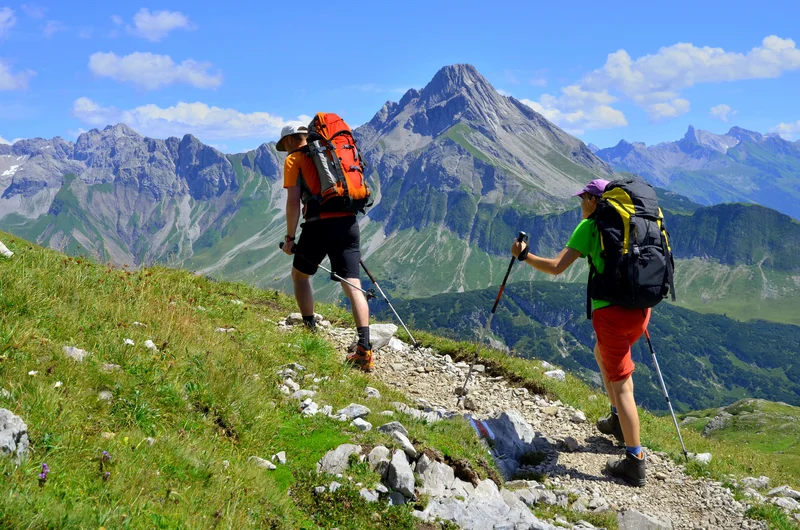
In the end there is one thing more important than anything else: the perfect backpack does not exist, what exists is the backpack that works best for you. Every trek, every season and every person have their own needs, and real skills come through experience. The first few times it may seem complicated, maybe you’ll pack too much or you’ll forget something useful, but this is exactly what will help you understand what is essential.
With time you’ll learn to find your balance: a backpack that does not wright more than necessary, that doesn’t make you stop every ten minutes and that makes you feel free to enjoy your journey. Because, deep down, the goal is not to have the perfect backpack, but to walk lightly – a lightness that lives in your mind first, then on your shoulders.